

Mourning rituals among the Lurs have roots in ancient Iranian history.
 Oct 20, 2015
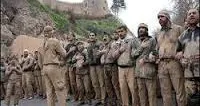
Mourning among the Lurs has roots in the history of ancient Iran. Lorestan dons black attire every year in mourning for Imam Hussein (AS), adorning this black garment with the blessed clay of Ashura. To write about the Ashura rituals in Lorestan, one must be in Lorestan during Muharram to feel the depth of sorrow of the people of this land in the grief of the master and the martyr. Here, there is no distinction between men and women, young and old; all are in mourning and sorrow for Hussein (AS). With the beginning of the month of Muharram in Lorestan, mourning processions and religious groups gather at night in places called "Kheymeh" (tents) to mourn, and some chain-beating and chest-beating groups also participate in the streets of the city, while a "Chel Cheragh" (forty lamps) moves in front of these groups. "Chel Cheragh," or forty lamps, consists of thirty to forty lantern-like lamps that are mounted in a beautiful and spectacular way with special skill on a triangular base made of wood or metal, and the needy mourners carry it in turn. The special ritual of "Gol Mali" (mudding) in Lorestan has several stages, which begins on the seventh day of Muharram, known as the day of "Tarash-e Abbas." On the seventh day of Muharram, all the mourners of Hussein go to the bath, and after shaving their heads and faces and complete cleaning, they wear clean clothes, and this day is called "Tarash-e Abbas." From this day onwards, in Lorestan, some people gather and collect firewood in the city on the morning of Ashura to protect the mourners who fall in the mud (the mud-falling ceremony) from the cold if it snows or rains on Ashura and the weather is cold. For this purpose, some people go around and ask for firewood from the houses by reciting phrases, and the people also give them firewood with pleasure, depending on their vows. On the day of Tasu'a, the mourners prepare soft and special soil called "Gol Baghchaleh" (clay) and pour it in large and small squares, which are usually made with brickwork in front of the tents and religious places of the city, and on the day of Ashura, they mix this soil with rose water and prepare the clay of Ashura. The sunset of the day of Tasu'a in Khorramabad is full of sorrow and mourning. Everyone is restless and waiting for an unfortunate event. Clay basins have been prepared in the city, and the collected firewood has also been piled up next to the clay basins. This ancient custom, although it is not as strong as it used to be today, is an example of people's participation in mourning the master and the martyr and has a deep cultural burden in itself. The city of Khorramabad is full of silence on the night of Ashura. The next morning, the chest-beating and chain-beating groups, before sunrise, connect the night to the morning, more restless than any other day of Muharram. The "Sorna" (a wind instrument) and the "Dohol" (drum), which are accustomed to playing "Chamari," with the beginning of the day of Ashura in the first hours of the day, the sound of the instrument and the drum with a mournful and sad melody known as the "Chamariyune" invites the mourners of Hussein to attend the processions and religious groups. "Chamar," "Chamari," or "Chamariyune" is a music and a mournful song that is played in mourning and sorrow for great people in different rhythms and by means of "Sorna" and "Dohol." The message of the "Chamar" ritual, in addition to expressing the peak of sorrow of the people of this land, carries a message for other people; in a way that by performing this musical position of mourning, everyone will understand that a great person from among the tribe or clan of the mourners has died. The morning of Ashura begins in most cities of Lorestan with the mournful sound of "Chamariyune," and all the earth and time weep for an event that has accustomed the "Sorna" and "Dohol" of Lorestan to play Chamari for years. The summoned mourners, by attending the religious places of the neighborhood and "Gol Mali" (mudding) themselves, stand around the fire to be protected from the cold and begin chest-beating and mourning. There is no cold and heat, summer and winter. The only thing that has covered the people in the grief of Hussein is the love and affection that the people of Lur have for the Ahl al-Bayt, Hussein (AS), and Abolfazl (AS). The sorrow and mourning that this spiritual atmosphere has is more than can be explained in a few lines; you must be there and see to know how the sorrow and mourning of the "Chamariyune" melody draws the lovers of Hussein (AS) to the alleys and religious groups. The people of Khorramabad and Lorestan province consider staying at home on the day of Ashura as inappropriate. From the beginning of the day, they put mud on their heads and shoulders in the first tent, and after the mourning ceremonies in the religious places of the neighborhoods of the city, they move towards the city center in the form of chest-beating and chain-beating groups. People come out from all the alleys, streets, and houses of the city. It seems like a resurrection is on the way that people have come to the city in this way. Chain-beating groups, by stopping in front of each tent (religious place), mourn with the eulogy of the eulogist of that place and then go to the next place. A mourner whose year is almost over, a young woman, rubs mud on the head of her newborn son. Her year is almost over. She has named him Hussein and says: I have vowed that my Hussein will participate in the Gol Mali ceremony every year on the day of Ashura in the grief of the martyrdom of Fatima's Hussein. The young woman, with her fingers, draws the image of a hand - as a sign of the hands separated from the body of Abbas - with the fragrant clay of Ashura on the green clothes of her little Hussein and whispers: "Peace be upon you, O Abolfazl al-Abbas (AS)." Whatever we say about the devotion of the people of Lorestan to Hussein and Abbas is not a drop in the ocean compared to all this love and affection. The devotion of the people of this land has gone to the point of love and life and has taken over the souls of all Lorestanis. To see the Ashura ceremony in the old religious groups of Khorramabad, one must go to the neighborhoods behind the bazaar and Darb-e Delakan. The chest-beating groups of these neighborhoods are among the oldest in the city. On the morning of Ashura, there is a commotion in these neighborhoods. The city bazaar is closed, and black flags have been raised on the doors of all the shops. All the mourners of Hussein have muddied themselves, and some are also waiting for the leader to adorn their entire bodies with the fragrant clay of Ashura. Some are standing around the fire to dry the mud on their clothes, while others are waiting to roll in the mud of Hussein's mourning, and still others are running around, chest-beating, and sometimes turning their hands in the sky and shouting mournfully: Hey Roo... Hey Roo... Hey Roo... If I were in Karbala, maybe... Here, everything is in the color of mud and mourning. The grains of mud roll slowly in the hair of the young man and sit on his cheeks. Tears find their way through the thin mud that has settled on the young man's face. And maybe if it were Ashura, he would have more to say than his tears for the stranger of Fatima's Hussein. The mourning groups that have poured from the alleys of the city like small rivers towards the city center join together. "The beloved of Zahra has no shroud..." The dust that rises from the chest-beating of the mourning groups to the sky settles gently on the black background of the tent. Today, mud is falling from the sky of Khorramabad, and the earth regains the ability to shed tears in the mourning of the heavenly people. It is near the noon of Ashura, and the mourners are chest-beating and reciting elegies more restlessly than in the morning: "Whose is this body that has no head / The beloved of Zahra has no shroud..." The method of chest-beating in Khorramabad is that they first sit and beat their chests with one hand, then when the reciter shouts "Woe to the martyrs in the desert of Karbala," everyone stands up and, while answering the reciter, beat their chests with both hands in front of each other, and after that, they go to another mourning house. What is important is that, as the years have passed, no change has occurred in the mourning method of the people of Lorestan, and it still maintains its past glory and permanence. The mourning ceremony of the people of Lorestan continues until noon and finally ends with a ritual called "Togh Ashgas." The "Togh" is a symbol of the flag of Hazrat Abolfazl (AS) (the standard-bearer of Karbala), which is held up in the mourning ceremonies common in some parts of the province, and a tradition called "Alam Bardari" or "Alam Gardani" is also common in this regard. The usual flag is usually made of a wood with a height of eight to ten meters as the main axis, which is formed from several rings connected to the main wood from one meter above. They also tie a velvet cloth around the rings and place a silver chandelier at the top and end of it and decorate its surroundings with colorful ribbons and small mirrors, which this flag is carried by the needy mourners until the noon of Ashura and finally, at the end of the noon of Ashura, as a sign of the fall of the flag of Hazrat Abbas (AS), its different parts are separated from each other, which is called "Togh Ashgas" in the terminology. The unspoken words on the mourning flag of Abbas (AS), the grief that settles in the hearts of the people of Lur when opening and lowering the flag, reminds them of the martyrdom of the standard-bearer of Karbala, Hazrat Abbas (AS). The green cloths and threads that the mourners of Hussein have tied to the flag are full of unspoken words. From the needs of an old woman who ties a vow for the well-being of her son to a young woman whose child's illness has not yet made her despair. There have been many patients who have been granted their wishes by tying a vow to the flag of the lion-hearted of Karbala, Hazrat Abolfazl al-Abbas (AS), and now, every year, they chain and beat their chests in front of the mourning groups for the stranger of Hussein and Abbas. The sleepless eyelids of Lorestan on the night of Sham-e Ghariban, and the Sham-e Ghariban ceremony in Lorestan has a different atmosphere. The Lorestani mourners, from the afternoon of Ashura for three nights, participate in the Sham-e Ghariban mourning by wrapping a special black turban called "Kat" around their heads, necks, and shoulders and lighting candles. Sham-e Ghariban in this land is full of candles that are kept lit for the grief of Zainab Kubra, and it is Lorestan that does not sleep until morning in the grief of the stranger of Hussein and the grief of Zainab's heart. In addition to the mentioned rituals, other ceremonies are also common in Lorestan during Muharram and Ashura. The establishment of "Sagha Khaneh" (water house), "Chel Manbari" (forty pulpits), Ta'zieh Khani (passion play), and mourning in the house of Ayatollah Borujerdi, known as the "Agha" house, are other rituals that are held in Lorestan province every year simultaneously with Muharram. http://yazahrajan.blogsky.com http://www.bornanews.i